
HOW TO CREATE AN EFFECTIVE EVENT RUNDOWN: TIPS AND EXAMPLE
One of the biggest factors that can determine whether an event runs smoothly or turns into chaos is the event rundown. While it may seem like a simple document, a rundown serves as a guide for the entire team, ensuring that each session stays on schedule and flows seamlessly from one segment to the next.
Unfortunately, many organizers treat the rundown as just another formality. As a result, events often run behind schedule, transitions become disorganized, or important agenda items are overlooked altogether.
So, how do you create an effective event rundown?
How to Create an Effective Event Rundown
1. Define Your Event Agenda
Start by listing all activities that will take place during the event, from registration and opening remarks to the main sessions and closing.
2. Set Realistic Time Allocations
Avoid creating an overly packed schedule. Give each session enough time to run properly, and don’t forget to account for transition periods between activities.
3. Leave Room for Buffer Time
Not everything goes exactly according to plan. Building in extra time can help absorb unexpected delays without disrupting the overall flow of the event.
4. Keep Everyone Informed
Make sure your MC, speakers, vendors, and production team have access to the finalized rundown. Clear communication helps everyone stay aligned and work more efficiently throughout the event.
Here’s The Sample of Seminar Event Rundown
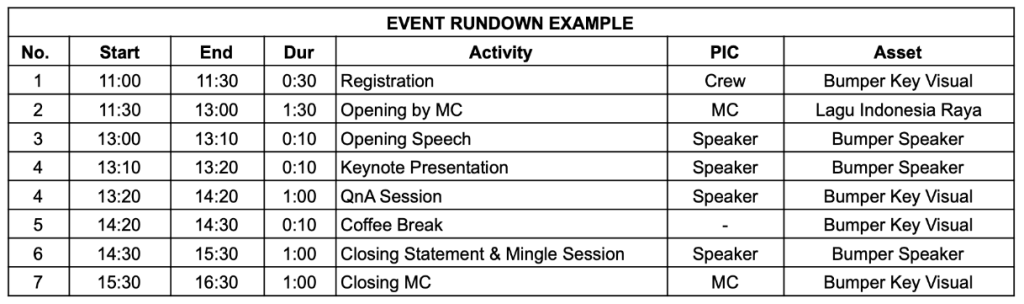
A good rundown doesn’t have to be complicated. What matters most is that it’s clear, realistic, and easy for everyone involved to follow. With a well-structured rundown, coordination becomes smoother, delays can be minimized, and the event is far more likely to stay on track.
If you’re planning an event and want to make sure every detail is carefully organized, the Studio Ink Production team is ready to support you—from rundown planning to on-site execution on the event day.
So, are you ready to bring your next event to life with fewer headaches and a lot less drama?